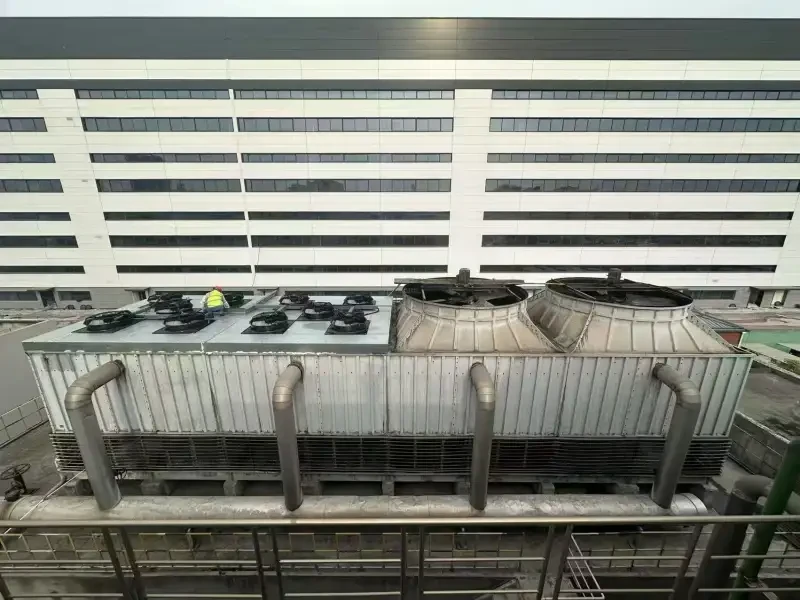
PANKA EC electronic commutation fans replace traditional AC and belt-driven fans. With a direct motor-to-impeller connection, they require zero maintenance and exceed IE5 efficiency standards. They support stepless speed control from 0 to 10V or 4 to 20mA and MODBUS-RTU group control. Paired with FAN Master intelligent selection software for precise model matching based on actual operating conditions, these fans enable energy-efficient retrofits for air systems in HVAC, data centers, and cleanrooms.
Use Cases
HVAC supply and exhaust systems, precision cooling for data centers and server rooms, cleanroom HVAC for biopharmaceutical and semiconductor facilities, air handling units for large office buildings and industrial manufacturing workshops, nature-mimicking controlled environments (e.g., aquatic animal exhibits in zoos), cooling tower and equipment heat dissipation airflow systems, and EC motor retrofits for existing AC external rotor fans and belt-driven fan systems.
Solve pain points
Traditional AC motor-driven fans suffer from low efficiency and high noise, failing to meet modern HVAC and cleanroom requirements.Belt-driven fans require regular belt replacement and lubrication, resulting in high maintenance demands and airflow reduction due to belt slippage.Fixed-speed fan operation leads to significant energy waste when actual load is below design capacity.The external rotor relies on natural airflow for cooling, which can create internal turbulence and degrade aerodynamic performance.Tight space constraints in data centers and HVAC modules: axial fan depth directly increases material and space costs.Multiple wind turbines lack a unified communication interface, making load-based tiered regulation and group control difficult.Manual selection from catalogs leads to calculation errors at operating points and lacks data for energy consumption and cost comparison.Insufficient clearance between the fan and the enclosure, leading to degraded airflow performance, was not identified during the design phase.
Solution Composition
On-site air volume, pressure, and load rate mapping to define existing AC fan operating conditions / Pank FAN Master intelligent selection software for matching models, automatic calculation of operating points, and PDF/Excel report generation / Pank EC fans (electronically commutated permanent magnet synchronous motors with integrated motor drives and direct-coupled impellers) / Aerofoil high-strength aluminum alloy blades with welded structure, lightweight design, and maintenance-free operation / Built-in 485 control module supporting MODBUS-RTU protocol and RS485 bus networking / Analog input/output (0~1VDC / 0~4~2mA) and pulse I/O interface configuration / Matrix fan array layout with multiple units in parallel for redundancy and staged regulation / Internal clearance verification (LA≥0.5×D2, LD≥1×D2, A≥1.5~1.8×D2) / Protection features (automatic shutdown on rotor lock, overvoltage protection, reverse polarity protection, overheating protection, alarm signal output) / Existing fan replacement with mechanical interface adaptation, field wiring, and commissioning / Performance acceptance testing and energy savings comparison