
In HVAC systems, motor energy consumption typically accounts for 40% to 60% of total system energy use. Many in-service air conditioning units still rely on asynchronous motors rated at IE2 or even IE1 efficiency levels, creating a significant gap between their operating efficiency and current high-efficiency standards. Replacing old motors with IE5 permanent magnet synchronous motors is one of the most cost-effective and mature retrofit solutions for HVAC energy savings. Drawing from years of industrial motor selection and energy-saving retrofit services, we have developed a selection logic and calculation method tailored for HVAC applications, designed to assist engineering professionals.
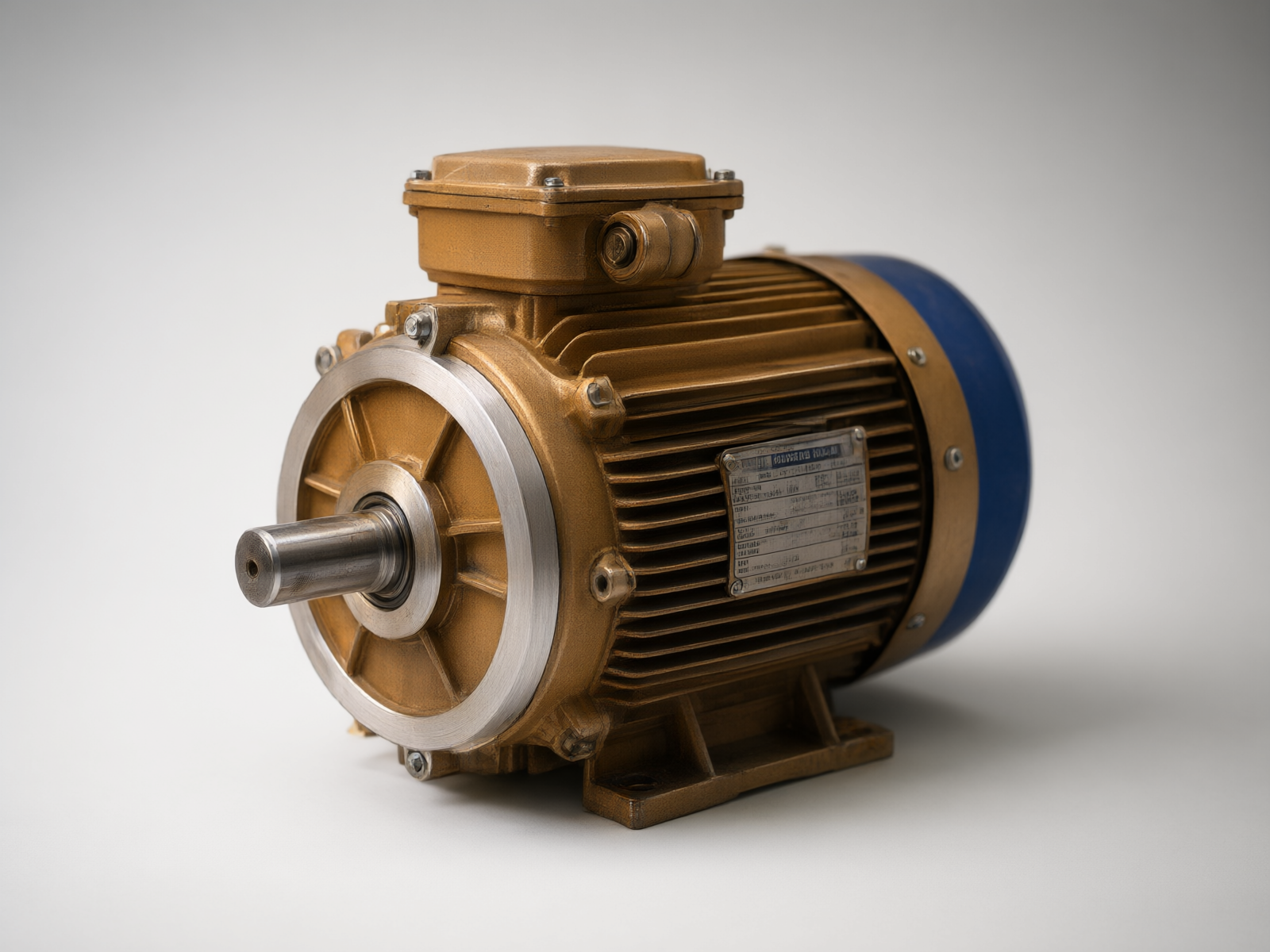
Step 1: Define original operating parameters
Replacing an old motor is not simply a matter of matching power ratings. Before selection, you must collect complete operating data from the original motor: rated power, rated speed, mounting type (e.g., B3/B5/B35), insulation class, protection rating, actual load factor, ambient temperature, and altitude. These parameters determine the physical fit and electrical compatibility of the new motor.
In HVAC applications, fans and pumps are the most common loads. They exhibit square-torque characteristics: torque is proportional to the square of speed, and power is proportional to the cube of speed. This means that at partial load conditions, the motor's actual output power is far below its rated power. When selecting a motor, do not match based solely on the nameplate rating. Instead, determine the new motor's rated parameters according to the actual power demand at the operating point to avoid efficiency losses from "oversizing" (e.g., "a big horse pulling a small cart").
Step 2: Quantitative Comparison of Energy Efficiency Ratings
The IEC 60034-30-1 standard classifies motor efficiency into five levels: IE1 through IE5. Taking a 7.5kW, 4-pole motor as an example, the efficiency limits under this standard are approximately 88.7% for IE3, 90.4% for IE4, and over 92.8% for IE5 permanent magnet synchronous motors. Moving from IE3 to IE5, each one-percentage-point improvement in efficiency results in significant electricity cost savings for motors running continuously throughout the year.
Permanent magnet synchronous motors (PMSMs) achieve IE5 efficiency primarily because their rotors use permanent magnets for excitation, eliminating rotor copper losses—the main loss source in induction motors. This efficiency advantage is most pronounced at low speeds and partial loads, which are typical operating conditions for HVAC systems. In real-world projects, replacing existing motors with IE5 PMSMs has yielded average energy savings of 15% to 30%, depending on the original motor's efficiency class and the system's actual load profile.
Step 3: Selection Considerations for VFD Matching
HVAC system load fluctuates continuously with season, time of day, and indoor occupancy. Fixed-speed operation leads to significant energy waste. IE5 permanent magnet synchronous motors paired with variable frequency drives enable wide-range stepless speed control, reducing motor speed at partial loads to match actual demand.
Two technical considerations are critical during selection. First, permanent magnet synchronous motors (PMSMs) experience torque ripple at low speeds; they require a variable frequency drive (VFD) with advanced control algorithms to ensure smooth operation in the low-speed range. Second, the motor's field-weakening speed range must cover the system's maximum speed requirements. Wolong Electric Drive's PMSM product line spans from 0.75kW to several hundred kilowatts. Paired with its dedicated VFDs, these systems deliver seamless speed control from 30% to 100% in HVAC applications while maintaining high efficiency.
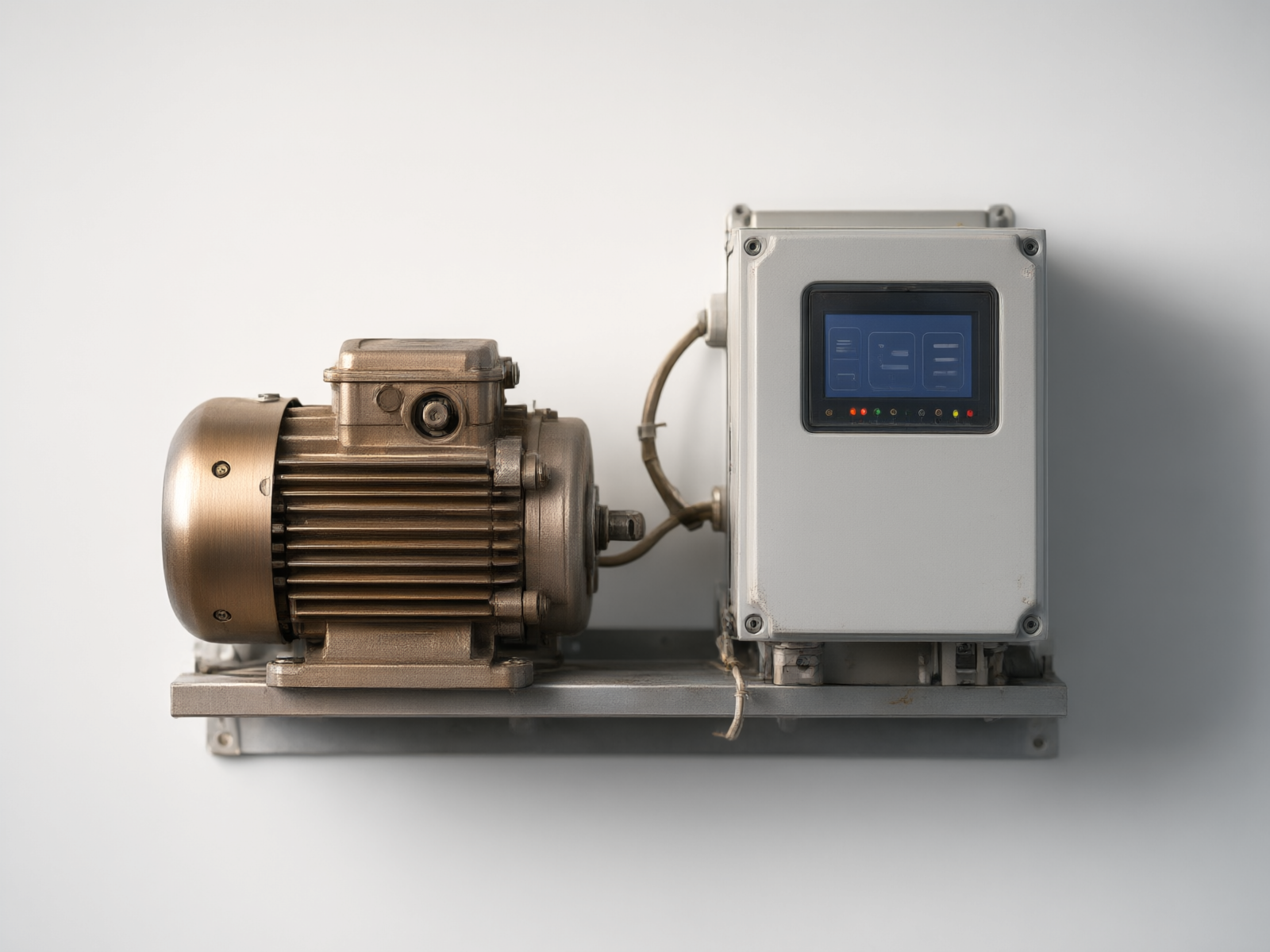
4. Energy Savings Calculation: From Theory to ROI
The core formula for energy-saving calculation is: Annual Energy Savings = (Power Difference Before and After Replacement) × Annual Operating Hours × System Load Factor. For example, consider an air conditioning circulation pump motor originally rated IE2 with a power of 11kW. It operates for 4000 hours annually at an average load factor of 70%, with electricity priced at 0.8 CNY/kWh. After replacing it with an IE5 permanent magnet synchronous motor, the motor efficiency increases from approximately 85% to over 93%. The estimated annual energy savings are calculated as follows: 11kW × 70% × (1/0.85 − 1/0.93) × 4000h ≈ 3117kWh, resulting in approximate annual electricity cost savings of 2494 CNY.
Calculating the payback period also requires factoring in total retrofit costs, including new motor procurement, variable frequency drive (VFD) expenses (if required), installation and commissioning fees, and potential piping modification costs. In HVAC applications, given long annual operating hours and stable electricity rates, typical retrofit payback periods range from 1.5 to 3 years. Panpu Electric provides energy-saving retrofit solutions by calculating performance for each unit based on actual operational data, delivering a comprehensive technical proposal that includes return on investment analysis.
V. Special Considerations for HVAC Scenarios
When replacing motors in HVAC systems, pay attention to several easily overlooked details. In explosive environments (e.g., machine rooms using R32 refrigerant), select motors with Ex d I/IIB/IIC explosion-proof ratings and verify the validity and scope of their certification during selection. Additionally, permanent magnet synchronous motors generate high inrush currents when directly connected to the grid; while this is not an issue in variable frequency drive systems, it must be addressed if a fixed-frequency direct-drive solution is used by verifying the power supply system's capacity margin.
Motor mounting dimensions and interface standards directly impact the retrofit schedule. Selecting a model compatible with the original motor's mounting footprint significantly reduces foundation modifications and coupling adjustments, thereby shortening downtime.
Replacing motors from IE2/IE3 to IE5 in HVAC systems is a proven, cost-effective energy-saving measure. Success hinges on accurately assessing original operating conditions, matching energy efficiency levels with variable frequency drive solutions, and rigorously validating ROI through detailed calculations. Panpu Electrical leverages Wolong Electric Drive's product portfolio and our engineering expertise to provide end-to-end technical support for HVAC clients—from selection and evaluation to retrofit implementation.