
Industrial motors consume approximately 45% of global electricity, with a significant portion still operating at low efficiency. Permanent Magnet Synchronous Motors (PMSM) achieve IE5 energy efficiency levels, offering typical energy savings of 20%-40% compared to asynchronous motors of the same power rating. Actual savings depend on the original motor's efficiency class and real-world operating conditions. The payback period is typically 18-36 months. For equipment running over 4000 hours annually, retrofitting for energy efficiency has become a viable strategy to reduce operating costs and meet carbon reduction targets.
1. Technical Advantages of Permanent Magnet Synchronous Motors
Permanent magnet synchronous motors (PMSMs) use rare-earth magnets to generate the magnetic field, eliminating the need to draw reactive power from the grid for excitation. This is the fundamental reason for their higher efficiency compared to induction motors. Within the 25%-100% rated load range, PMSM efficiency remains stable, with a more pronounced efficiency advantage under light-load conditions.
Using a 75kW, 4-pole motor as an example, and referencing the IEC 60034-30-1 efficiency limits alongside our published comparison data for permanent magnet and asynchronous motors: the rated efficiency of an IE3 asynchronous motor is approximately 93.2%, while that of an IE5 permanent magnet synchronous motor is about 95.1%. Assuming 6000 annual operating hours, an electricity price of 0.8 CNY/kWh, and continuous operation at rated load, the annual energy savings per unit are approximately 75 × (1/0.932 − 1/0.951) × 6000 ≈ 9650kWh, resulting in cost savings of roughly 7700 CNY. For an enterprise with 20 units of the same specification, the total annual energy-saving benefit would be approximately 15 ten thousand CNY.
The power factor of a permanent magnet motor approaches 1.0, reducing reliance on additional reactive power compensation equipment and lowering line losses and transformer capacity requirements in the distribution system. In variable frequency drive applications, PMSMs pair better with inverters than induction motors, boosting overall system efficiency by an additional 3%-5%.
II. Typical Use Cases and ROI
The economics of an energy retrofit depend on annual operating hours and load characteristics. Payback periods are typically shorter in the following scenarios:
Fan and pump loads in HVAC systems typically operate for over 5000 hours annually with significant load fluctuations. Permanent magnet motors offer substantial efficiency advantages during variable-speed operation; when paired with VFD drives, they can achieve energy savings of 20% to 35%. In a data center cooling water system retrofit case, replacing 4 40kW asynchronous motors with permanent magnet synchronous motors resulted in annual energy savings of 28 million kWh, with the payback period achieved within 22 months.
Continuous-operation equipment such as air compressors, injection molding machines, and conveyor belts operate at a load rate of 60% or higher, fully unlocking the efficiency advantages of permanent magnet motors. Heavy-load equipment in industries like mining, cement, and papermaking runs for over 6000 hours annually, delivering significantly higher absolute savings from energy retrofitting.
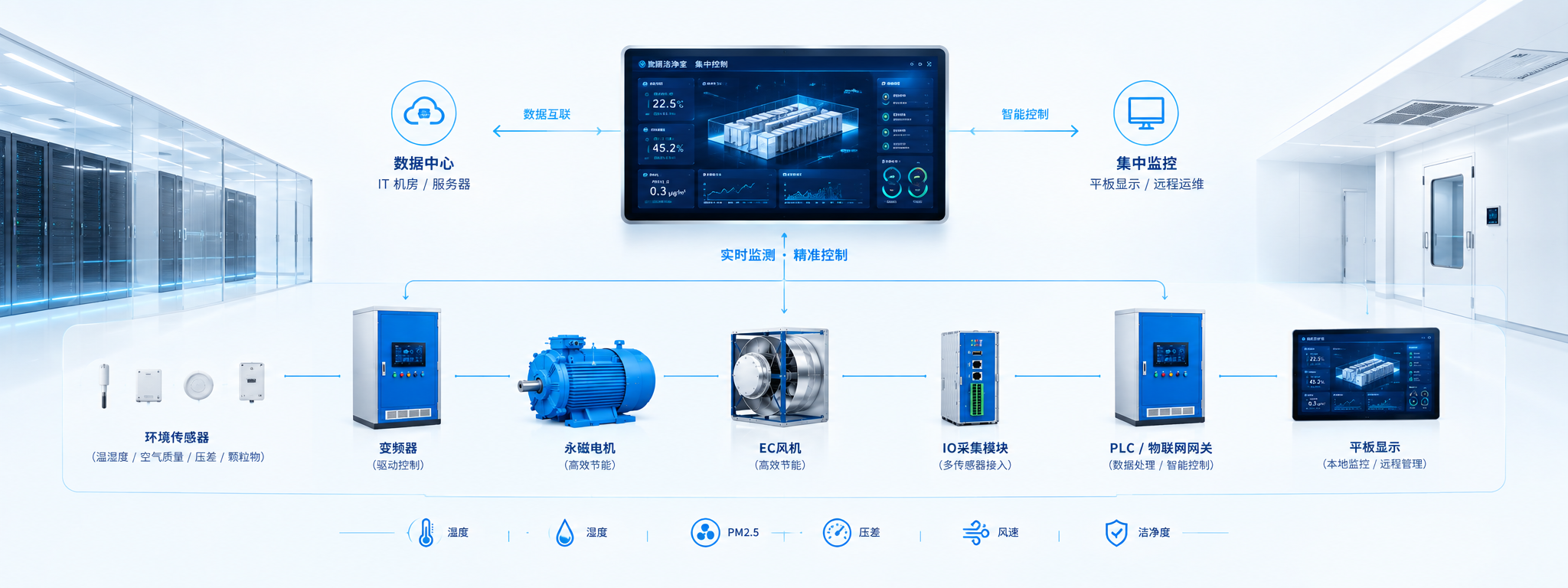
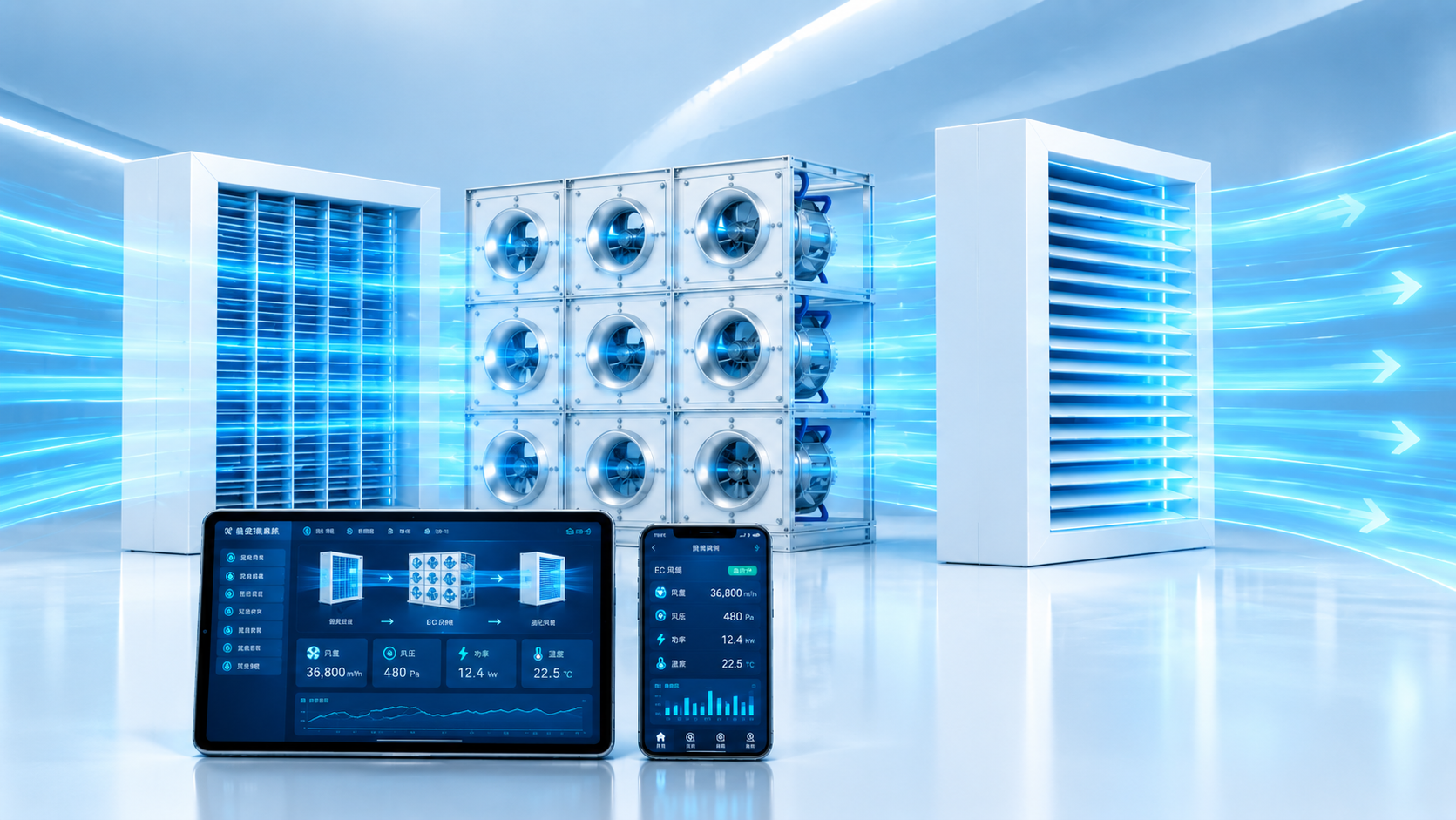
EC fans (electronically commutated fans) represent another application of permanent magnet technology. With an integrated drive circuit, they require no external variable-frequency drives and are ideal for data centers, cleanrooms, and commercial ventilation where both noise control and energy efficiency are critical.
III. Key Stages of Implementation
Energy efficiency retrofitting is not a simple motor swap; it requires system-level assessment and matched design. Step 1: Analyze load characteristics to define operating conditions, speed control requirements, and starting torque needs. Step 2: Select the motor based on load power, speed range, and mounting dimensions. Choose an appropriate permanent magnet (PM) motor model; adjust transmission ratios or coupling specifications if necessary. Step 3: Match the drive system. PM motors typically require dedicated variable frequency drives (VFDs). Since their control algorithms differ from induction motors, verify that the drive supports sensorless vector control or encoder-based feedback for PMSM.
The on-site survey phase also includes distribution capacity validation, harmonic assessment, and electromagnetic compatibility checks. The retrofit plan should include an energy efficiency verification plan to quantify actual power savings by installing electricity meters or energy monitoring systems.
IV. Panpu Electric's Retrofit Service Capabilities
Shanghai Panpu Electric Technology Co., Ltd. is an authorized distributor of Wolong Electric Drive (Authorization No.: WLPEFX20260018), specializing in industrial motors, permanent magnet synchronous motors, variable frequency drives, and energy-saving retrofit solutions. Leveraging research resources from Tongji University and Xiamen University, we provide end-to-end services ranging from product selection and on-site surveying to solution design and energy efficiency verification.
Our product portfolio covers industrial standard motors, explosion-proof motors, permanent magnet synchronous motors, switched reluctance motors, variable frequency drives, EC motors and fans, automation control products and systems, sensors and instruments, vibration motors, and more. We meet retrofit needs across HVAC, data centers, water treatment, mining and metallurgy, food and beverage, and other industries. As an authorized distributor of Wolong Electric Drive, Panpu Electric provides genuine products with factory-authorized technical support, ensuring authentic equipment selection and after-sales service.
The core of energy retrofit projects is alignment and validation. Panpu Electrical defines energy efficiency goals during the design phase and provides post-retrofit measured data comparisons, giving customers clear visibility into their actual return on investment.
For motor equipment operating over 4000 hours annually, there is ample project experience demonstrating the economic benefits of energy-saving retrofits. Contact Panbu Electric for a technical solution and quote: call 15201939701 (Mr. Zhang) or visit www.panbu.com.